

Introduction
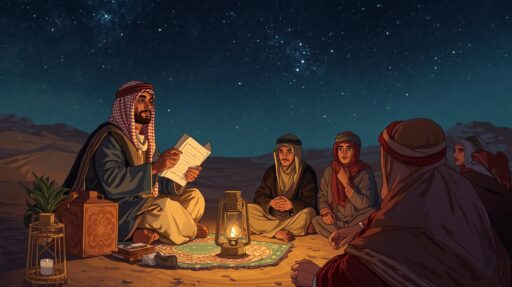
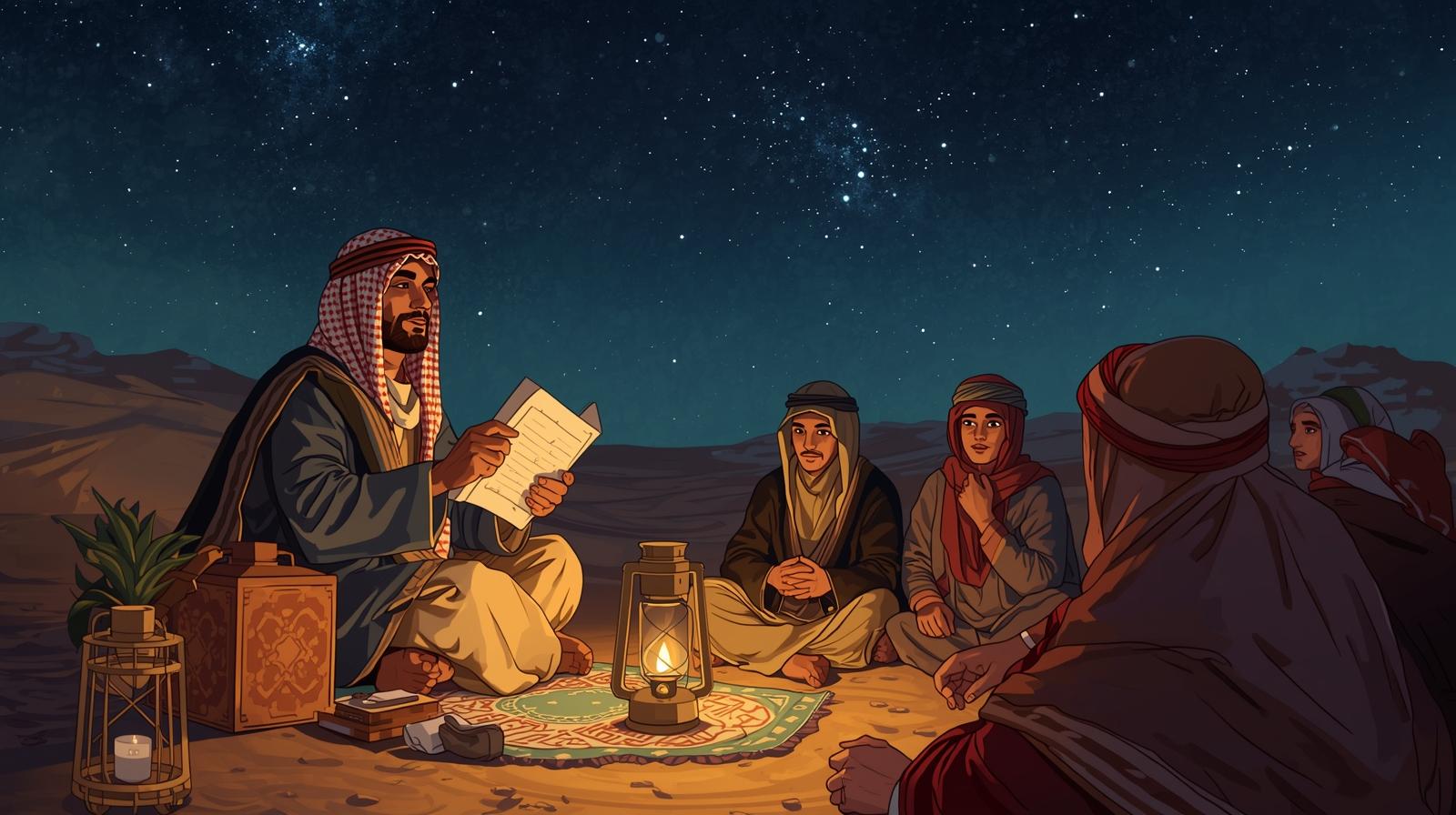
Across the vast, silent expanses of the Arabian desert, a unique and evocative musical tradition was born from the rhythm of the camel’s gait and the need for human connection. This is Al Taghrooda (or Nazal), the traditional Bedouin art of singing poetry while traveling. Unlike the collective performances of Ayala or Fijiri, Al Taghrooda is an intimate, conversational, and improvisational art form, typically involving two poets singing verses back and forth across the desert caravan. Recognized by UNESCO as an Intangible Cultural Heritage of Humanity, Al Taghrooda is a beautiful expression of Bedouin life, transforming the arduous journey across the sands into a moving tapestry of wisdom, humor, and shared experience.
The Structure of a Song: Call, Response, and the Camel’s Pace
A Taghrooda performance is structured around a simple yet powerful call-and-response format. One poet, often riding at the front of the caravan, will sing a short verse (a single line of Nabati poetry). Another poet, riding further back, will respond with a second verse that complements or answers the first. Each verse is typically just two to four lines long. The singing style is distinct—a high-pitched, nasal, and slightly strained vocal delivery that allows the voice to carry over long distances. The rhythm of the singing is not dictated by drums but by the steady, plodding walk of the camels. This intrinsic connection to the caravan’s movement makes the music a functional part of the journey, helping to regulate the pace and soothe the animals.
Themes of the Desert: Love, Landscape, and Social Commentary
The subject matter of Taghrooda poetry is as vast as the desert itself. Poets sing about the beauty of the desert landscape, the qualities of their camels, their longing for loved ones, and themes of friendship and generosity. It is also a platform for social commentary, where poets can offer wise advice, settle disputes through witty repartee, or gently chide a member of the caravan. The verses, though short, are rich with metaphor and imagery drawn directly from the Bedouin environment. A poet might compare a beloved’s eyes to a desert oasis or use the image of a specific star to convey a message of guidance. This art form turns the journey itself into a source of poetic inspiration.
A Social Bond and an Oral Archive
The primary function of Al Taghrooda is social. In the isolating environment of the desert, this musical dialogue forged a powerful bond between the travelers. It alleviated the boredom and fatigue of the journey, provided mental stimulation, and strengthened the sense of community. It was also a dynamic oral archive. While the verses were often improvised, the most clever and beautiful ones would be remembered and repeated on other journeys, passing into the collective memory of the tribe. In this way, Al Taghrooda was a living, evolving repository of Bedouin wisdom, history, and linguistic skill, transmitted not in books but on the wind.
Preservation in a World of 4x4s
The tradition of Al Taghrooda faced a severe threat with the advent of modern transportation. The desert journeys that were its natural habitat were replaced by air-conditioned 4×4 vehicles, and the camel caravan became a symbol of the past rather than a necessity of the present. However, recognizing its profound cultural value, the UAE has actively worked to preserve it. Today, Al Taghrooda is performed at cultural festivals, heritage competitions, and national day celebrations. Elder masters of the art form teach it to younger generations in schools and cultural clubs, ensuring that the poetic dialogue of the desert does not fall silent.
Conclusion: The Unbroken Verse
Al Taghrooda is a testament to the human ability to create beauty and connection in the most challenging of circumstances. It represents the soul of the Bedouin—resilient, poetic, and deeply communal. While the context of the camel caravan may have faded, the spirit of Al Taghrooda endures. Its preservation is a commitment to keeping alive a uniquely desert-born form of communication, one where poetry was not just read but sung into existence, weaving a thread of shared humanity across the endless, golden sands. It remains an unbroken verse in the long poem of Emirati heritage.