


Introduction
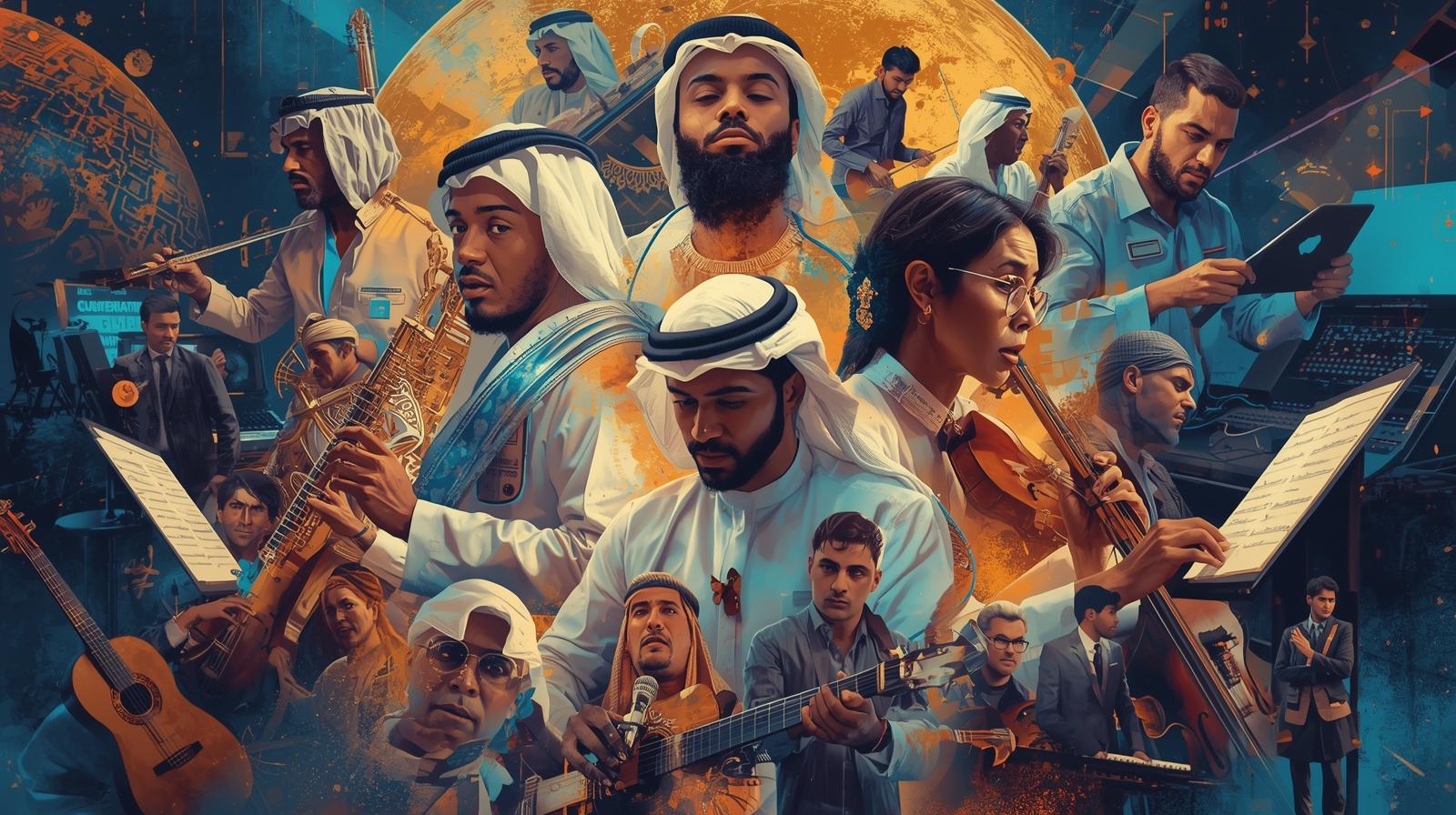
As the UAE’s film and media industries experience a creative boom, a new and vital sound is emerging to score its stories: the music of homegrown Emirati composers. Moving beyond the generic “Hollywood-Arabian” scores often used in international depictions of the region, these composers are crafting a unique sonic identity for Emirati cinema and television. They are blending traditional Arabic melodies and instruments with the sweeping orchestral language of international film music and contemporary electronic production, creating a soundscape that is both locally authentic and globally resonant. This new generation of composers is not just providing background music; they are becoming essential storytellers, giving a distinct voice to the narratives of the modern UAE.
From Cultural Cliché to Authentic Voice
For decades, Western films set in the Middle East relied on a limited set of musical clichés: the wailing of the ney (reed flute), the drone of the oud, and generic “desert” motifs. While these sounds are part of the region’s heritage, they often failed to capture its nuance, diversity, and modernity. Emirati composers are now challenging this one-dimensional portrayal. They draw from a much deeper well of inspiration, incorporating the complex rhythms of Ayala, the melancholic modes of Fijiri, and the poetic cadences of Nabati verse. Their goal is to create a score that feels true to the emotional and cultural landscape of the story, whether it’s a historical drama, a contemporary social commentary, or a futuristic sci-fi film.
Pioneers of the Score: Ihab Darwish and the Fusion Ethos
A leading figure in this movement is composer Ihab Darwish, an Emirati of Syrian origin who has become a central voice in scoring the nation’s stories. His work on major Emirati films like “Sea Shadow” and “Abdullah” exemplifies the modern fusion approach. In “Sea Shadow,” a coming-of-age story set in a modern Emirati neighborhood, Darwish masterfully blends a traditional Arabic vocal with a contemporary indie-rock sensibility and orchestral strings. This fusion mirrors the film’s central theme of navigating tradition and modernity. Darwish and his contemporaries understand that to score the UAE authentically, the music must reflect its complex, layered identity—a place where the past is in constant conversation with the future.
The Sound of the Nation: Scoring Heritage and Ambition
The work of these composers often falls into two broad categories, reflecting the dual nature of the UAE’s own narrative. On one hand, they are called upon to score historical and heritage films, where their deep knowledge of traditional music is paramount. They use authentic instruments like the oud, rababa, and various percussion to create a sense of time and place, but with a contemporary production quality that makes it accessible to modern audiences. On the other hand, they are increasingly scoring projects that reflect the UAE’s ambitious, forward-looking vision: corporate films about innovation, documentaries about space exploration, and media for global events like Expo 2020. Here, the sound often leans into ambient electronic music, hybrid orchestral textures, and optimistic, soaring themes that convey progress and optimism.
Building an Industry: Education and Collaboration
The rise of Emirati film composers is being supported by a growing infrastructure. Universities in the UAE are now offering programs in music production and film scoring. Furthermore, collaborations with international composers are providing valuable knowledge transfer. An emerging composer might work as an assistant on a major Hollywood film shooting in Abu Dhabi, learning the craft at the highest level before applying those skills to local stories. This combination of formal education and practical, global experience is rapidly professionalizing the field, ensuring that the quality of music in Emirati media can stand shoulder-to-shoulder with international productions.
Conclusion: Defining a Sonic Identity
The emergence of a distinct cohort of Emirati composers for film and media marks a significant step in the cultural maturation of the nation. It signifies a move from consuming imported cultural products to producing and scoring their own. These composers are the sonic architects of the UAE’s self-image, translating the nation’s history, its present-day complexities, and its future dreams into a powerful musical language. Through their scores, they are ensuring that the stories of the UAE are not just seen but deeply felt, with a soundtrack that is as unique, ambitious, and layered as the nation itself.