

Introduction
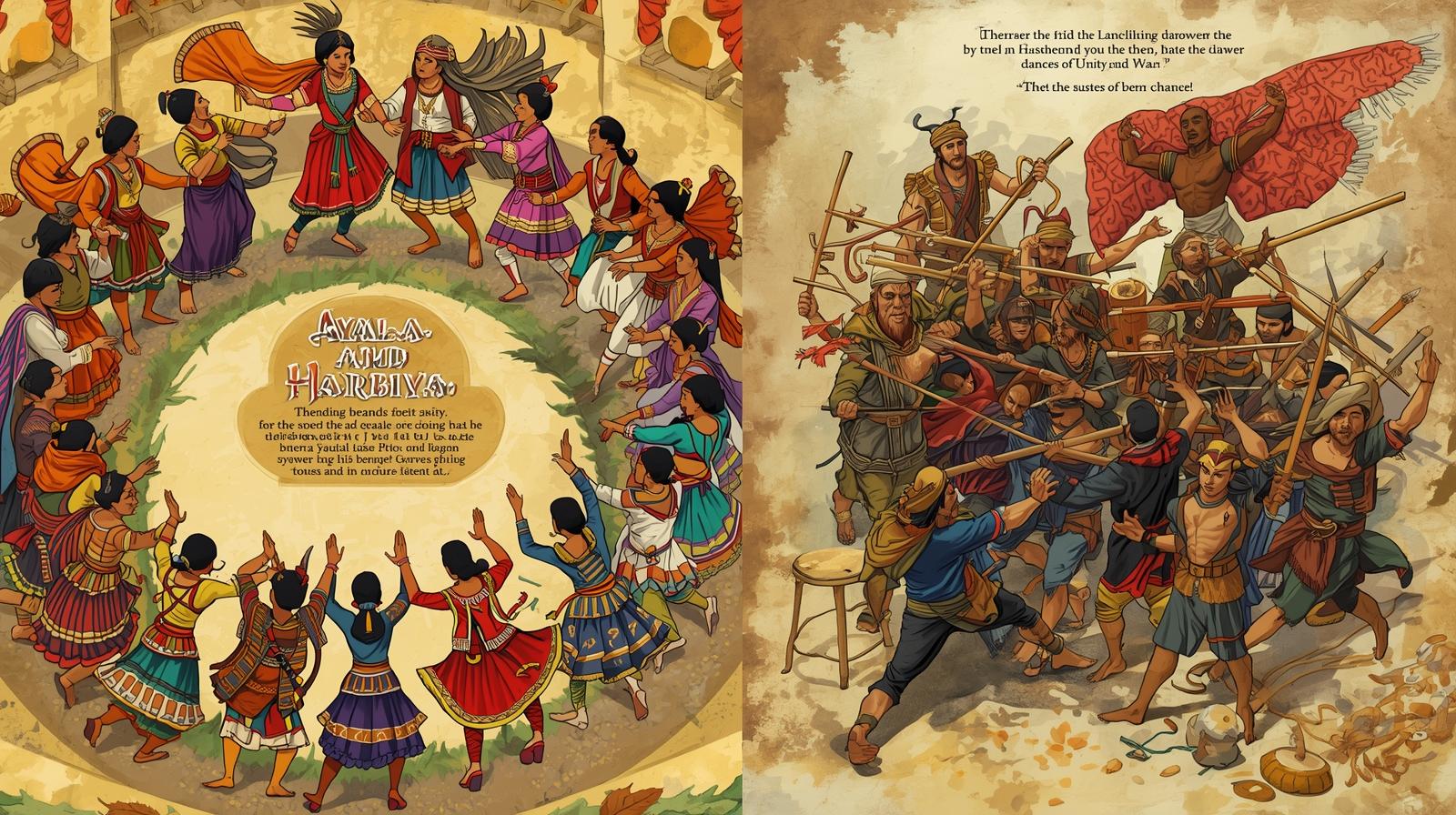
In the UAE, music and movement are inseparable, and nowhere is this more evident than in the powerful, communal performances of Ayala and Harbiya. These traditional art forms are far more than dance; they are living narratives of tribal identity, social cohesion, and historical memory. Performed to the compelling rhythms of dozens of drums, Ayala and Harbiya represent two sides of the same coin: one a celebratory performance of unity and welcome, the other a dramatic reenactment of war and Bedouin valor. Understanding these performances is to understand the communal spirit and the historical realities that shaped the Emirati character long before the discovery of oil.
Ayala: The Dance of Community and Welcome
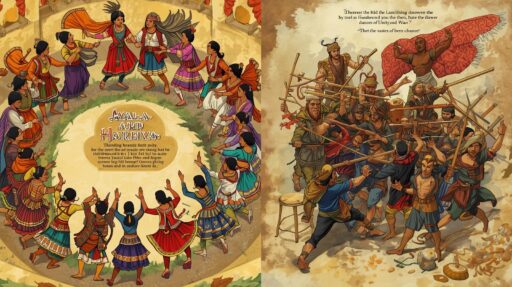
Ayala (also known as Al-Ayyala or Al-Wahawah) is the most widespread and recognizable traditional performance in the UAE. It is a group dance typically performed at weddings, national celebrations, and other festive occasions. Two parallel rows of 20 or more men face each other, representing two opposing tribes or groups. The performers, swaying rhythmically from side to side, wave thin, elegant bamboo sticks (al-asaya) in unison, symbolizing spears or swords. Between the rows, other performers move with swords or rifles, displaying individual skill. The entire performance is accompanied by a battery of percussionists playing large, double-sided drums (al-ras) and smaller tambourines (al-tasa), creating a powerful, hypnotic rhythm. A poet, or “nashaad,” stands between the rows, chanting verses of Nabati poetry that praise the tribe, extol virtues like courage and generosity, and welcome guests. Ayala is a powerful visual and auditory expression of solidarity, strength, and hospitality.
Harbiya: The Choreography of Battle
While Ayala has a stylized, symbolic connection to war, Harbiya is a more literal and dramatic reenactment of battle. Its name is derived from “harb,” the Arabic word for war. This performance is a narrative dance that depicts the entire sequence of a Bedouin battle, from the initial challenge and preparation to the clash of swords and the final victory. Performers are divided into two groups and use actual, often antique, swords and shields. The movements are more aggressive and mimetic than in Ayala, including parrying, thrusting, and choreographed duels. The accompanying poetry is also more militant, recounting tales of historical battles, legendary heroes, and tribal glory. Harbiya is less common than Ayala today, preserved by specialized folk troupes, as it requires a deep knowledge of the choreography and the use of traditional weaponry.
The Music: The Rhythmic Heartbeat of the Performance
The music for both Ayala and Harbiya is provided by a dedicated group of drummers. The foundation is laid by the al-ras, a large drum held under the arm and played with a heavy beater, which produces a deep, resonant boom that can be felt as much as heard. The smaller al-tasa, a thin, single-headed frame drum, provides a sharper, higher-pitched counter-rhythm. The interplay between these drums creates a complex, polyrhythmic texture that drives the dancers’ movements. The rhythm is not merely a metronome; it is a communicative force, with specific patterns signaling changes in the dance’s intensity and sections. The unison of the drumming mirrors the unison of the dancers, physically manifesting the concept of the community moving as one.
Social Function and Modern Relevance
Historically, these performances served critical social functions. They were a way to train young men in coordination and discipline, to publicly display a tribe’s strength and unity to rivals and allies, and to preserve the oral history of battles and leaders. In the modern UAE, their function has evolved, but their importance has not diminished. They are now potent symbols of national identity and cultural pride, performed on Union Day and for visiting dignitaries as a demonstration of the nation’s rich heritage. Learning and performing Ayala is a rite of passage for many young Emirati men, connecting them to their history and to each other in an unbroken chain of rhythm and movement.
Conclusion: The Living Pulse of Heritage
Ayala and Harbiya are not frozen relics from the past; they are the living, breathing pulse of Emirati heritage. In the synchronized sway of the dancers and the thunderous roll of the drums, one can feel the enduring values of community, courage, and shared identity. These performances are a direct link to the Bedouin and tribal past, a time when survival depended on unity and strength was displayed through art. As the UAE continues to forge its future, Ayala and Harbiya remain essential, reminding its people that their nation was built not only on oil and ambition but on the timeless, rhythmic beat of a shared heart.