

Introduction
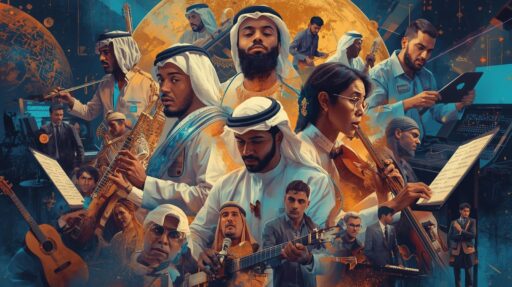
In the rich tapestry of Emirati music, the human voice may tell the story, but it is the traditional string instruments that provide its emotional color and melodic soul. Two instruments, in particular, have been central to the musical life of the region for centuries: the oud and the rababa. These instruments, one representing the sophisticated urban traditions of the Arab world and the other the soulful poetry of the Bedouin desert, offer a fascinating study in contrast and complement. Their distinct sounds and social contexts paint a fuller picture of the UAE’s musical heritage, from the bustling souqs of the coast to the silent expanse of the desert interior.
The Oud: The Sultan of Instruments
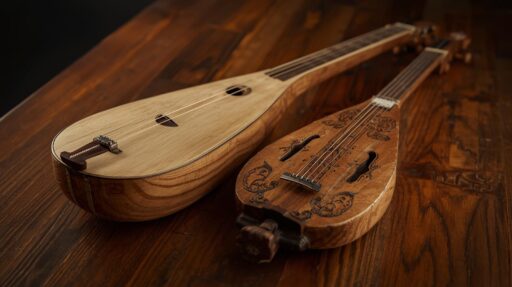
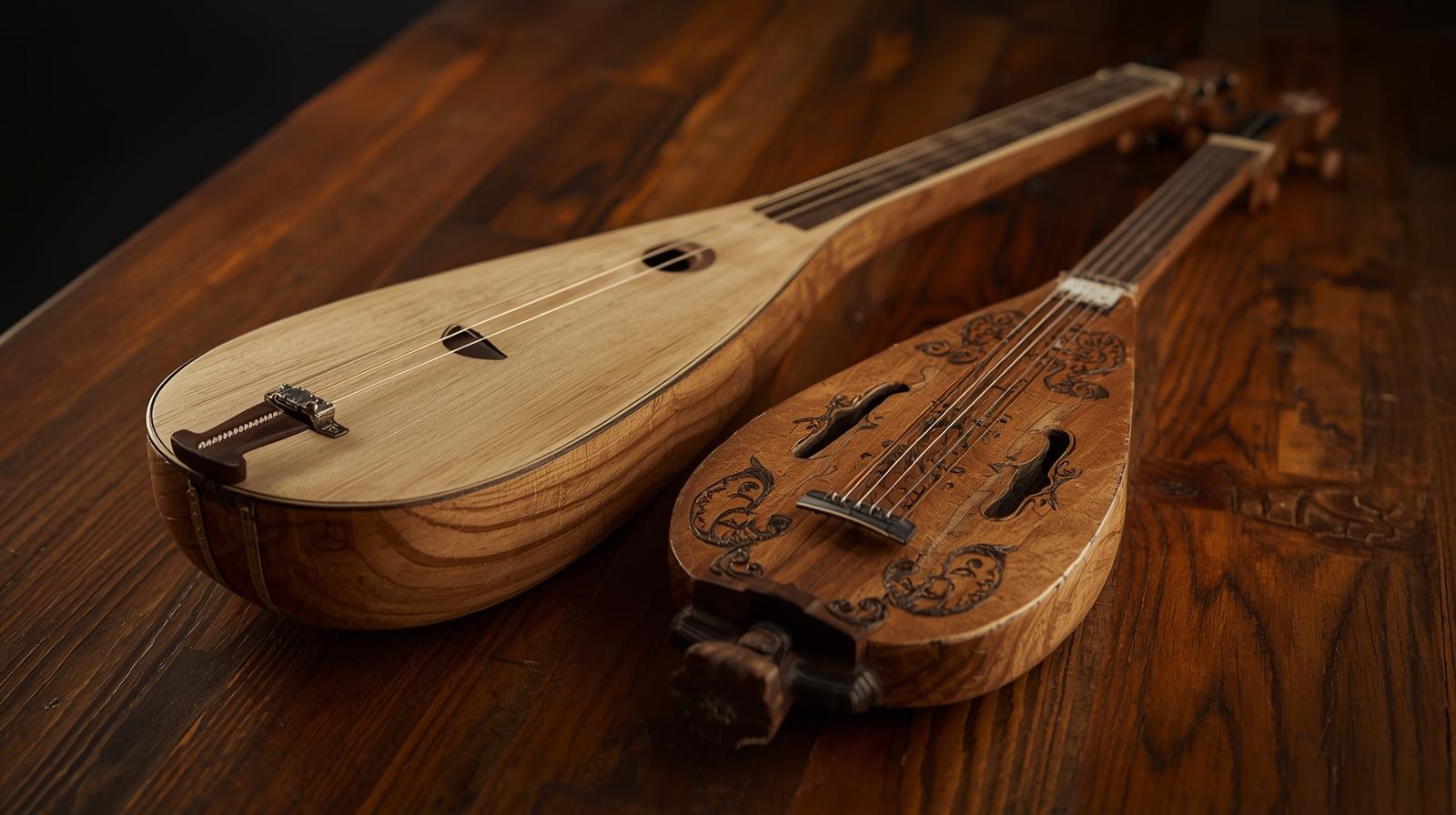
The oud is a short-necked, fretless lute with a deep, pear-shaped body, often called the “sultan” or “king” of Arabic instruments. It is the cornerstone of classical Arabic music and was a staple in the musical gatherings of coastal merchants and urban centers. Its fretless neck allows for the subtle microtonal shifts that define the Arabic maqam (modal) system, giving its music a fluid, expressive, and deeply emotional quality. The oud typically has 11 strings (five courses of double strings and a single bass string) and is played with a plectrum called a “risha” (feather), often made from an eagle’s feather. In the UAE, the oud would have accompanied singers performing classical Muwashshahat or provided instrumental interludes in urban folk traditions, its complex melodies reflecting the cosmopolitan nature of the trading ports.
The Rababa: The Voice of the Desert
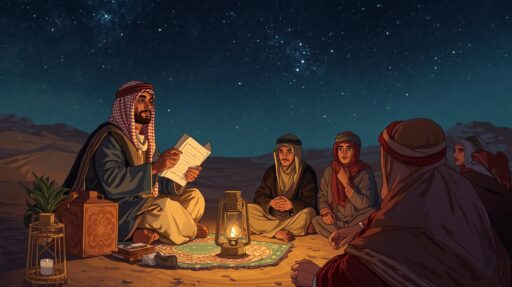
In stark contrast to the sophisticated oud stands the rababa, a much simpler, ancient instrument that is the traditional companion of the Bedouin poet. It is a spiked fiddle, typically with one or two strings, made from a simple rectangular soundbox often covered with animal skin (like goat or lizard). The string, traditionally made from horsehair, is played with a horsehair bow. The rababa’s sound is raw, haunting, and nasal—perfect for cutting through the desert air. It was not used for complex melodies but to provide a continuous, droning accompaniment to the recitation of Nabati poetry. The poet-singer would play the rababa himself, using its repetitive, hypnotic sound to underscore the emotional weight of his verses about love, loss, bravery, and tribal history.
A Tale of Two Contexts: Urban Sophistication vs. Desert Soul
The social contexts of these two instruments highlight the diverse cultural streams within the UAE. The oud was an instrument of ensemble playing, often heard in the majlis of wealthy merchants or at urban weddings. Its music required formal training and an understanding of complex musical theory. The rababa, however, was the instrument of the individual. It was the voice of the solitary Bedouin, a tool for storytelling and personal expression around a desert campfire. It required no formal training; mastery came from a deep feeling for poetry and the rhythms of desert life. One instrument speaks of community and structured artistry, the other of individuality and raw, spontaneous emotion.
Craftsmanship and the Changing Soundscape
The making of these instruments was itself a traditional craft. Ouds were meticulously crafted from prized woods like walnut, maple, and spruce, their construction a science of acoustics and aesthetics. The rababa, true to its nomadic origins, was built from whatever materials were at hand—a piece of wood, some animal skin, and horsehair. Today, while mass-produced ouds are common, there is a growing appreciation for handcrafted instruments. The rababa, however, faces a steeper challenge, as the skills and lifestyle that produced it have faded. Its preservation is now part of the broader effort to safeguard Bedouin intangible heritage.
Conclusion: Strings That Tie the Past to the Present
The oud and the rababa represent the two hearts of Emirati musical heritage: the cultured, outward-looking heart of the coast and the deep, poetic heart of the desert. In contemporary UAE, both instruments have found new life. The oud remains a beloved symbol of Arab culture, taught in music schools and played by modern fusion artists. The rababa is being rediscovered by a new generation of musicians who see its unique sound as a powerful link to their Bedouin roots. Together, their strings continue to vibrate, connecting the skyscrapers of Dubai and Abu Dhabi to the timeless poetry of the desert, ensuring that both the urban and the nomadic souls of the nation continue to be heard.